
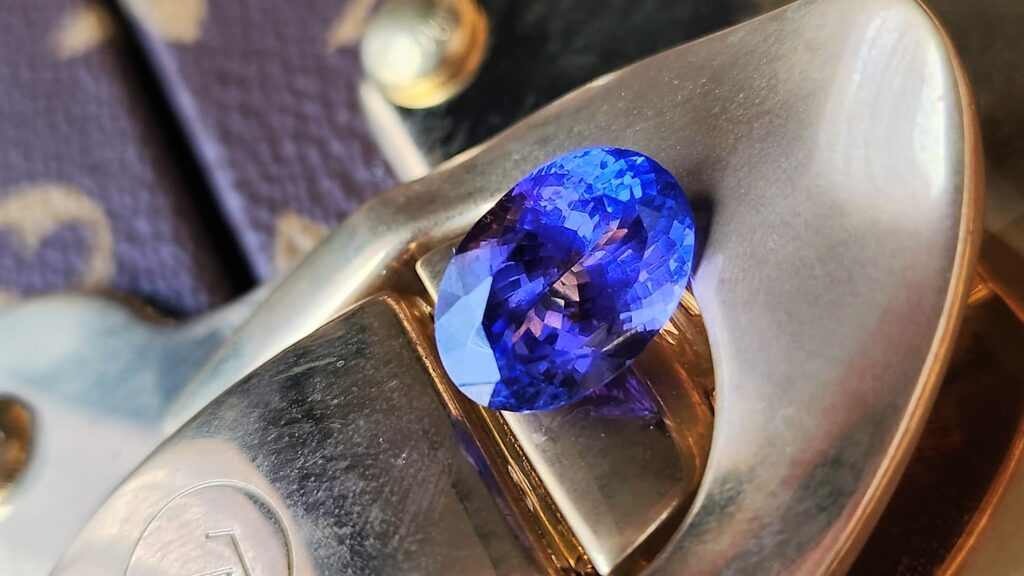
Tanzanite was discovered in 1967 in Tanzania, the only place where tanzanite is found. The gemstone was introduced to the trade in 1968 by Tiffany & Co., who later renamed it Tanzanite. Acclaimed by the industry as a “gemstone of the 20th century”, Tanzanite soon became the best alternative to sapphire at a much more affordable price.
Tanzanite was ushered into the limelight by Tiffany & Co. a year after it was excavated in 1967. Its rich blue hue became an instant sensation and was hailed as the gemstone of the 20th century.
Standard colour:
Tanzanite shows different colours when viewed in different crystal directions, gleaming with unmistakable shades of blue and violet as the orientations change. The finest tanzanite displays a rich and deep violetish-blue (similar to a sapphire) or a uniquely-recognisable violet hue. Owing to its intense and saturated colour, tanzanite is also often described as velvety.
For years, many jewellery companies have favoured distinctive and vivid hues. More affordable than sapphire, tanzanite is an excellent alternative to the world of blue-coloured gemstones for collectors.
Mohs hardness: 6 - 7
Origin: Tanzania